
The Right Key Always Fits: On Intent, Alignment & Execution
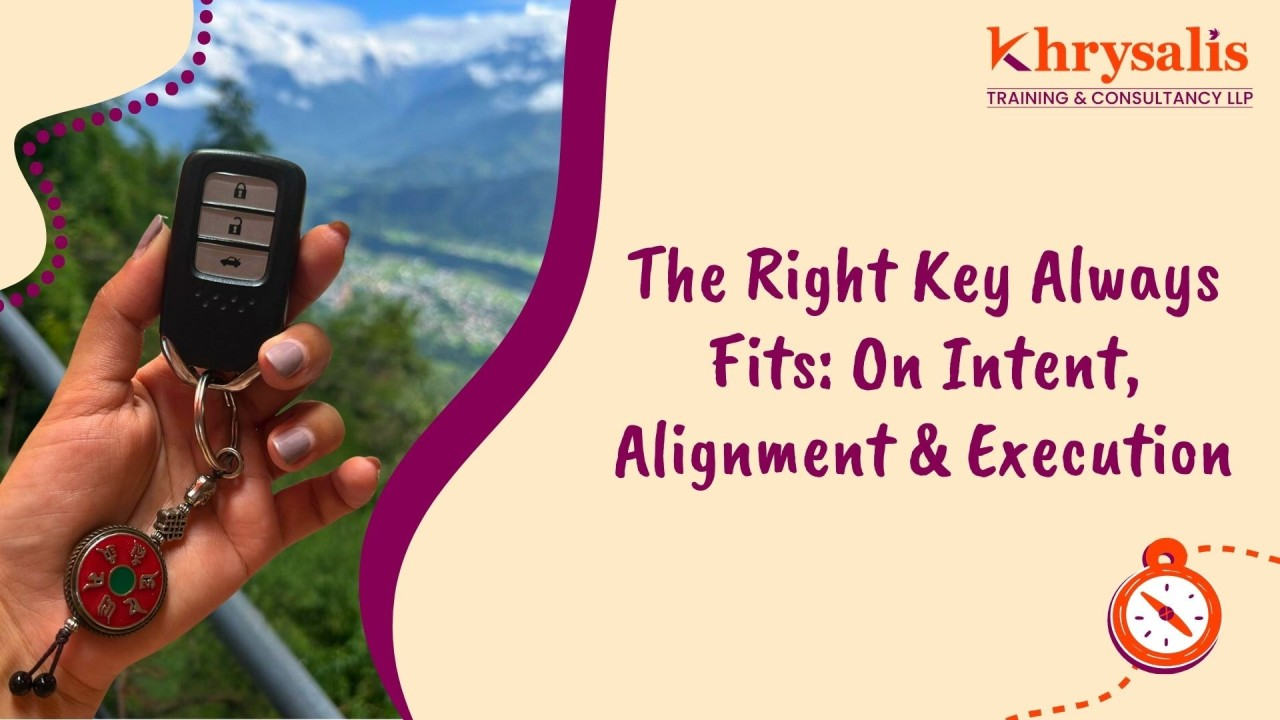
It was one of those weekends while I was moving in circles at a crowded parking lot that was buzzing with cars. I pulled up, handed my keys to the valet, received the counterfoil, and went inside the building.
A few hours later as I came out of the building, ready to leave, I returned to the valet desk and handed over my token. “I’ve parked your car a little far off,” he said, so I waited. Ten minutes had passed and he was out of sight. I saw him walk towards me with a confused and uncomfortable look. “The car is not unlocking,” he said.
“That’s not possible,” I replied, puzzled. “Are you sure you’ve got the right car?”
He nodded, convinced. We walked together to the vehicle. Everything looked right. I told him to give me the key, so that I could try unlocking the car myself! When he handed me the key he had been using, I looked at it and said “This is not my key!”
It turns out, in the chaos of back-to-back car handovers, the valet had tagged the keys incorrectly. Two cars of the same make had been mixed up. The car I was trying to retrieve was mine, but the key that was being used belonged to someone else.
That parking lot experience stayed with me not because of the delay, but because of what it revealed: Right intent works when there is also right action and alignment. This is exactly what happens in organizations.
As leaders, we often start with the right intent. We launch initiatives, we set ambitious goals. But if our systems, roles, or processes don’t line up with that intent, things stall and energy gets wasted, progress gets stuck. And we are left wondering why something that should have worked…didn’t.
Realigning the Keys: Three Leadership Shifts
1. The right intent is only the starting point, we need supporting structures: Audit Your “Tags” – Are your processes, meetings, and tools designed to serve your intent.
What’s one ritual or system you have inherited that no longer fits the intent it’s meant to serve, what’s one structure you need to bring in?
2. Misalignment is often invisible: It hides in assumptions, unclear ownership, or legacy processes.
Clarify the “Make and Model” – What does success really look like? Who owns what? What are the guardrails when things go off track?
What might be misaligned beneath the surface?
3. Realignment is a leadership responsibility: Not through blame, but through reflection, curiosity, and course-correction.
Normalize “Key Checks” – Create a culture where it’s safe to ask: “Are we sure we are using the right key?” Encourage clarity over assumptions.
The valet’s mix-up was resolved not by blaming individuals, but by pausing, tracing the error, and realigning the system. It’s a reminder that good leadership isn’t just about driving forward, it’s about knowing when to slow down and check the tags.
Here is some food for thought:
What’s one part of your leadership or organization where the intent is clear yet the execution feels off?
Maybe it’s time to slow down, recheck the tags, and ask: “Am I using the right key for what I’m trying to unlock?”
Where have you seen intent and execution misaligned and how did you realign the system?
I would love to hear your thoughts, do drop a comment below- Your reflections might be the key to someone else’s question.
Leave a Reply